
Control is Overrated - Observations from the Champions League

What I found to be the most interesting in the Champions League first knockout round is a recurring theme in some of the ties - the winner didn’t have to outplay the loser for the majority of both legs. In fact, it was mostly the opposite. From the ties that I watched, that certainly applied to Real Madrid - Paris Saint-Germain, and to a lesser degree Juventus - Villarreal and Inter - Liverpool.
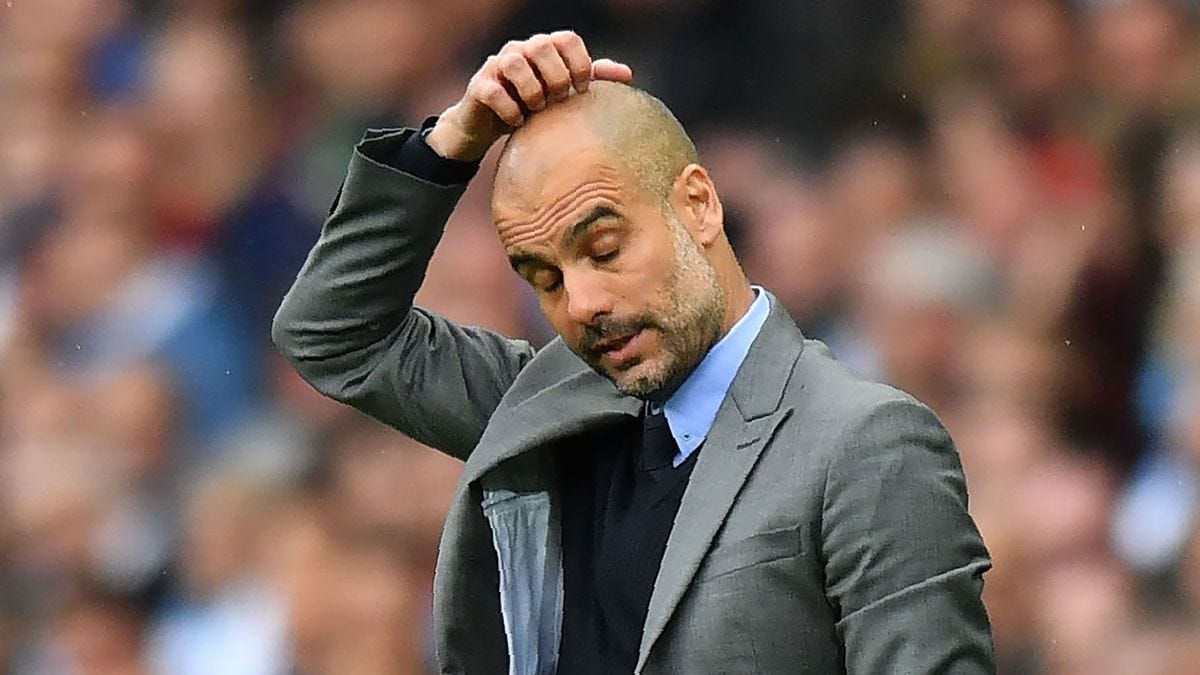
That’s the beauty of knockout football, and why it’s never a measure of the strongest. Otherwise, Pep Guardiola teams would win it most years. After all, Bayern and City have mostly dominated their leagues under his guidance. But the Champions League has continued to elude him in large part for his excessive focus on seeking total control, which is more suitable for league competitions.
In knockout competitions, however, many micro factors play a part - luck on the day, injuries, a ref. decision or a ball that hits the post. But in the games I’m choosing to further dissect, more than anything it was pure cunningness from the eventual winners in how they sealed their qualification.
Paris Saint-Germain - Real Madrid
Plenty has been said about how Paris Saint-Germain imploded, or how they are rotten to the very core, or that their legacy in the Champions League is that of meltdowns, the polar opposite of their 13 time champions counterparts. But, in terms of football, Paris pretty much had this tie under control for all but 30 mins. The first leg in Paris could and should have finished by more than one goal. PSG’s high press was well executed and suffocated Madrid’s build up - they didn’t know how to get out of their box. When Paris had the ball, they targeted the space behind Carvajal and dragged Militao out of position. Verratti ran the show. Messi even missed a penalty and didn’t bother sending Mbappe clear on goal on a couple of occassions.
The second leg was more of the same, except even better from Paris. They had extended spells of possession that were a thing of beauty. Again, they targeted Carvajal as Madrid’s weakest link and doubled up with Nuno Mendes and Mbappe. Neymar’s passes were perfectly weighed and Mbappe scored three on the night, but only one counted.
But none of that seemed to matter. For two reasons: the first is tactical - Ancelotti is made for nights like this. Madrid had a wild card on the left in the freak of nature that is Vinicius. They needed some of that energy in the middle and on the right. Enter Rodrygo and Camavinga. Suddenly, Real were a hell lot more direct and faster in their transitions. The second, and far more decisive reason is purely mental. The intangibles. Benzema presses a dead ball, Donnarumma loses the ball and with it Paris lose all their confidence. 1-1. Madrid, with all of their 13 titles and the Bernabeu pushing them, turn into superhereos against PSG’s mere mortals. Modric wins the ball in midfield, goes on a run defying physics and ends the move with a pass that could only be described as magic. Benzema strikes again. 2-1. Ancelotti calls Valverde over for instructions, now is the time to go for the kill. Benzema at this point is having an out of body experience, pushing Vinicius and co. to press as soon as Paris kick off. Somehow Paris lose the ball once they kick off and a couple of seconds later Benzema is celebrating his hattrick. That’s all it took to undo Paris Saint-Germain’s good work.
Villarreal - Juventus
On paper, an easy encounter for the Turin giants. In reality, a big road bump. If Allegri is a defensive - tactical mastermind, then Emery is his Spanish counterpart. Juve went ahead in Spain as soon as things kicked off, but Villarreal slowly grew into the tie. Juve used a 5-3-2 in defense transitioning into a 4-4-2 while attacking, with Cuadrado going forward on the right and McKennie doing the same on the left. Villarreal controlled possession though with the exquisite Dani Parejo sitting as an Argentinian ‘5’ and Lo Celso - the ‘10’ in Emery’s 4-4-2/4-2-3-1 in possession. Their football was tidy, they were more balanced, but they lacked bomber Gerard Moreno. 1-1 flattered Juventus.
In Turin, Allegri opted again for a back five which frankly baffled me. Villarreal were going to sit and absorb, happy to go as far as extra time or penalties. As they did in last year’s Europa League final against Manchester United - the club’s first ever trophy and the Unai Emery special. With McKennie this time out injured, Juve’s key offensive weapons were Cuadrado on the right and the solid but unspectacular De Sciglio on the left. Three defenders on Danjuma seemed too many, especially since Lo Celso plays between the lines. Villarreal opted to defend compact and narrow, limiting Morata and Vlahovic as much as they could. They played their odds. That opened up spaces for the mezzali Rabiot and Locatelli who were mostly wasteful.
Then the chess match started. In the second half, Emery went even more defensive and completely closed up shop. Preferring the defensive Coquelin to the cultured - but admittedly underwhelming on the night - Trigueros. More compact, more narrow, and more deep. Vlahovic - Morata stood no chance against Albiol - Pau Torres with Rulli behind them. When Gerard Moreno came on to partner Danjuma, it was only a matter of time before the script wrote itself.
The three goal demolition was not a reflection of the match. But Juve, both mentally and tactically, completely collapsed once Villarreal went ahead. They knew they had no chance of scoring against this Villarreal and so again a tie of 180 minutes was sealed in just a few.
Inter - Liverpool
At San Siro, Inter played a first half typical of Italian teams when they’re underdogs and playing at home. Very tactical, full focus, pure determination, and a great atmosphere. Inter were clearly better and the execution of their plan only lacked a goal. Back five stopped Liverpool’s front three. Brozovic, Vidal, and Calhanoglu took full control of the midfield. Second half Inter started even better - Inter’s transitions were super and they found space behind Liverpool’s fullbacks; only the goal was missing. Then Klopp’s changes completly flipped the whole tie on it’s head. Henderson and Keita gave Liverpool back the control in midfield, Firmino and Diaz started asking questions of Inter’s solid defensive unit. Then bang, two set piece goals, and the tie all but over. Did Liverpool get lucky? Or did Simone Inzaghi fail to respond to Klopp’s tactical tweaks? I tend to side with the latter.
Second leg was all uphill for Inter. Nevertheless, Liverpool perhaps made it easier than they should have by taking their foot off the gas a bit. They still threatened from set pieces and nearly scored twice. Inter maintained the same organization from the first leg, but were surprisingly cautious. They hardly ever attempted to attack and Liverpool were unlucky hitting the post/bar three times. As soon as the match threatened to get interesting with a Lautaro wonder goal, Alexis Sanchez got sent off and Simone Inzaghi opted not to waste more energy on the Champions League. Both sides lost the match they deserved to win, but in the end Liverpool went through without breaking much of a sweat despite never dominating this tie.
Conclusion? Not a breakthrough discovery by any means, but 10 minute spells were enough to seal these ties in which both teams seemed competitive, mostly in favor of the side that seemed less in control. Full control is a utopian idea, what matters is surviving then taking full advantage when the moment comes. Something that could not be said of Ajax who dominated the group stages, but fell short once things got serious. City and Bayern showed the less fun side of the Champions League, when the gap between two opponents on the pitch is so big that it’s pretty one sided.